
If your National Disability Insurance Scheme (NDIS) plan has capacity building funding, it's there to help you build skills and independence over time. Here's what NDIS capacity building supports are, how the funding works and how to make the most of it.
What capacity building supports are
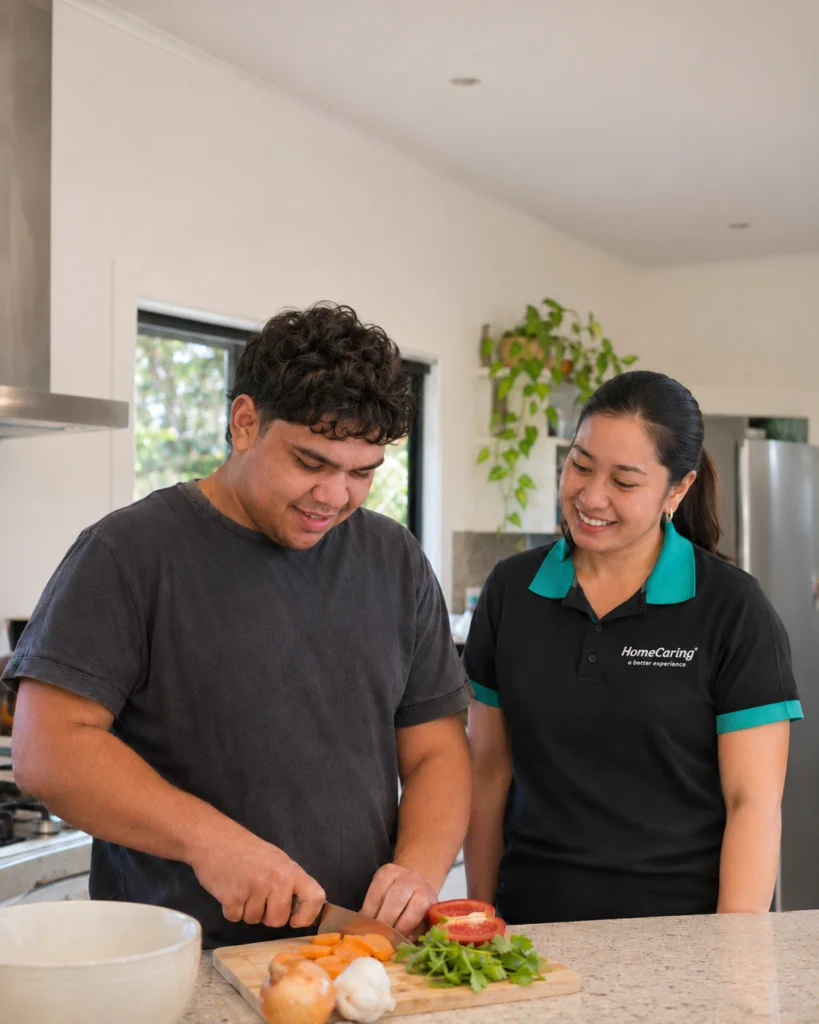
Capacity building supports help you learn and practise new skills, so you can do more for yourself. They focus on your goals, such as cooking your own meals, finding work or getting around your community.
They're different from core supports, which help with everyday tasks now. Capacity building is about what you'd like to be able to do next.
The categories in your plan
The NDIS says your capacity building budget can have funding in up to nine support categories (NDIS capacity building supports). You'll only see the ones that match your goals. They include:
-
Support coordination: help to understand your plan, find providers and use your supports
-
Improved daily living: assessments, training and therapy, such as occupational therapy or physiotherapy
-
Improved living arrangements: help to find and keep somewhere suitable to live
-
Increased social and community participation: support to build skills for joining in activities you enjoy
-
Finding and keeping a job: support to prepare for work or keep a job
-
Improved life choices: plan management, if you've chosen a plan manager
Other categories cover relationships, health and wellbeing, and learning.
How this funding works
Capacity building funding is set for each category. That means you can't move money from one capacity building category to another (NDIS capacity building supports).
So if your plan has funding for therapy, you'll use it for therapy. If your needs change and a category no longer fits, you can ask for a plan change. Talk to your local area coordinator or the National Disability Insurance Agency (NDIA), which runs the NDIS.
Funding for some supports is changing. Since 1 October 2026, the NDIS has reduced some funding when a plan is created or reassessed. Plan renewals follow from 1 February 2027. Funding for improved daily living skills is reduced by 10%, and for social, economic and community participation by 50%.
Some supports, such as employment supports, aren't affected, and safeguards apply for some people with very high support needs. The government explains the funding changes.
From 1 April 2027, the NDIS will start moving people to a new way of planning. The government says more detail is coming. Until then, check how your own plan sets out your supports.
Need help working out your options?
Talk to a local team about the support you need
No obligation, and we’ll explain your options in plain English.
Get started Or call 1300 875 377Making the most of capacity building
A little planning helps your funding go further:
-
Start with your goals. Choose supports that build a skill you've named in your plan.
-
Ask how progress will be measured. A therapist can set small steps and check them with you.
-
Keep a simple record. Notes on what's changed help at your next plan review.
-
Use skills between sessions. Everyday practice at home often makes the biggest difference.
How capacity building links with everyday support
Capacity building works best alongside your everyday supports. For example, a therapist might show you a safer way to cook. Your support worker can then help you practise it during the week, at your pace.
You choose how involved your support workers are. If you'd like them to follow a therapist's plan, tell them, and share the parts you're happy to share.
Getting ready for your plan review
Your plan review is the time to show what capacity building has helped you do. Bring examples, reports from your therapists and anything you'd like to work on next.
If you'd like help preparing, our guide to preparing for your NDIS plan review walks you through it. For questions about your plan, contact the NDIS on 1800 800 110.
Talk to us about your NDIS supports
At HomeCaring, we're a registered NDIS provider, and your supports are led by people who live and work in your community. Tell us the skills you'd like to build, and we'll talk you through how our team can support you between therapy sessions. Reach out to our Care Specialists on 1300 875 377.