
Empowering your independence with the right tools. We know the right assistive technology can make daily tasks safer, easier and more comfortable, helping you stay independent at home and connected to your community. At HomeCaring, we proudly provide NDIS-funded assistive technology products that support your goals and suit your lifestyle. Whether you need simple aids or more complex equipment, our expert team will help you find the best solution.
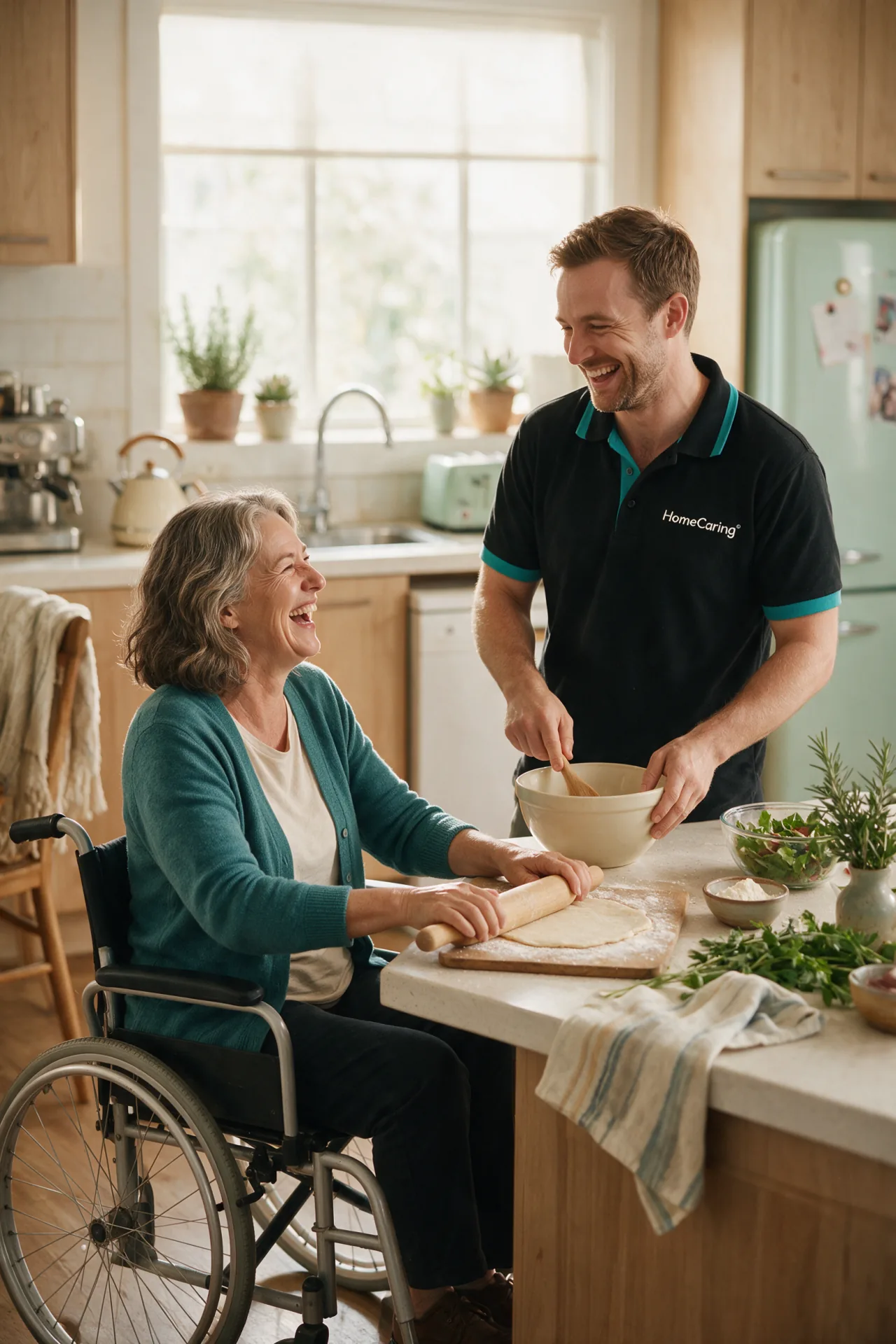
With HomeCaring and NDIS registered supplier Mobility Caring, you can source the assistive technology products that will help you live easier. Our team understands what works best in the care situations that are important to you and can help you choose the right products from high-quality, trusted brands. Our range includes:
To help you sit or stand safely and independently
To help you sit or stand safely and independently
View productsFor travel, community outings and independence
For travel, community outings and independence
View productsIncluding power, manual, transit and lightweight models
Including power, manual, transit and lightweight models
View productsWith adjustable handles, brakes and storage
With adjustable handles, brakes and storage
View productsIncluding hospital beds and pressure-relief designs
Including hospital beds and pressure-relief designs
View productsFor safe transfers and strength development
For safe transfers and strength development
View productsFor managing sleep apnoea with auto-adjust settings
For managing sleep apnoea with auto-adjust settings
View productsCompact options for easy travel
Compact options for easy travel
View productsIncluding crutches, braces, TENS machines and more
Including crutches, braces, TENS machines and more
View productsSuch as shower chairs, bath boards, grab rails
Such as shower chairs, bath boards, grab rails
View productsIncluding cooking utensils, personal alarms and signage
Including cooking utensils, personal alarms and signage
View products
Some assistive technology items require a formal assessment to determine what’s suitable and what funding you’re eligible for. We can support you with:
| Level | Definition | Description | Examples |
|---|---|---|---|
| Level 1 (simple, low-risk AT solutions) | low in cost and come with a low level of risk | the individual identifies and buys these items themselves from everyday suppliers, such as the local pharmacy. These items need very little set up and assistance to use essentially includes daily living solutions and daily adaptive equipment | Non-slip bathmats, adapted grip equipment, continence pads, bedding protectors, large print labels and doorbells |
| Level 2 (standard AT solutions) | Standard products can be purchased off the shelf from an Assistive Technology supplier | You can test these products before deciding on a final choice. Depending on your individual circumstance, you may require an assessment. Only minor adjustments are needed to the item before use | Bath seats, ramps and handrails, simple bathing and toileting devices, chair raisers, slide sheets and transfer equipment and orthotics |
| Level 3 (specialised AT solutions) | While similar to standard assisted technology, this level of AT often needs to be modified to suit your specific needs | An assessment is required, as an experienced professional is required to help identify and set up these items | Home modifications such as the adaptation of a bathroom area, desktop electronic magnification, power wheelchairs, products to help you do things your disability stops your body from doing,pressure mattresses, equipment that moves and lifts you, environmental control units, non-standard beds |
| Level 4 (Complex AT solutions) | This equipment is not available on the shelf and is usually custom-made to suit the individual | It can be configured specifically for one person’s requirements rather than being a system that will suit the needs of multiple people. Ongoing specialist support (including specialised training) is required to identify, buy and use these items | Home modifications that are considered to be complex, cochlear implants, myoelectric prosthetics and implant speech processes |
The NDIS provides funding for people with disabilities to access services that can help them reach their goals. Alongside care services, therapy, training and capacity building programs, this also includes funding for a category called ‘Assistive Technology’.
The official definition used by the NDIS for ‘assistive technology’ comes directly from the World Health Organisation. Essentially, it is any device or system that enables users to perform many tasks that they would otherwise be unable to do.This includes things such as lift chairs, mobility scooters, power wheelchairs, walking frames, cpap machines, hospital beds and shower chairs. Assistive technology items help keep the person safe and comfortable, as well as allowing them to do more tasks on their own.
For a more comprehensive list of what is included as NDIS Assistive Technology, you can download the most recent Assistive Technology and Consumables Code Guide from the NDIS website.
While the NDIS funds a wide range of equipment, there are some things that aren’t covered by the Assistive Technology category. This includes:
To access funding for NDIS Assistive Technology as part of your individual plan, you will need to complete an assistive technology assessment. The aim of this assessment, as mentioned above, is to ensure that both you and the NDIA fully understand which assistive technology solutions are going to be most suitable for your needs and goals.
It is worth noting that the process that you will go through depends on the assistive technology required. For instance, if items are low cost or low risk, you do not need a form to be sent directly into the NDIS. Instead, if you have funds in your plan, you can find the equipment and purchase it for yourself.
On the other hand, complex and specialised Assistive Technology requires a full assessment form. Thismust be completed by the Assistive Technology Assessor. In some cases, a higher level of consideration towards the use of assistive technology will be necessary. This could be due to specific concerns about the individual or the environment where the equipment is going to be used.